
Yoga for Osteoporosis: Safe Modifications, Poses to Avoid, and Teaching Guidelines
All You Need to Know About Teaching Yoga for Osteoporosis
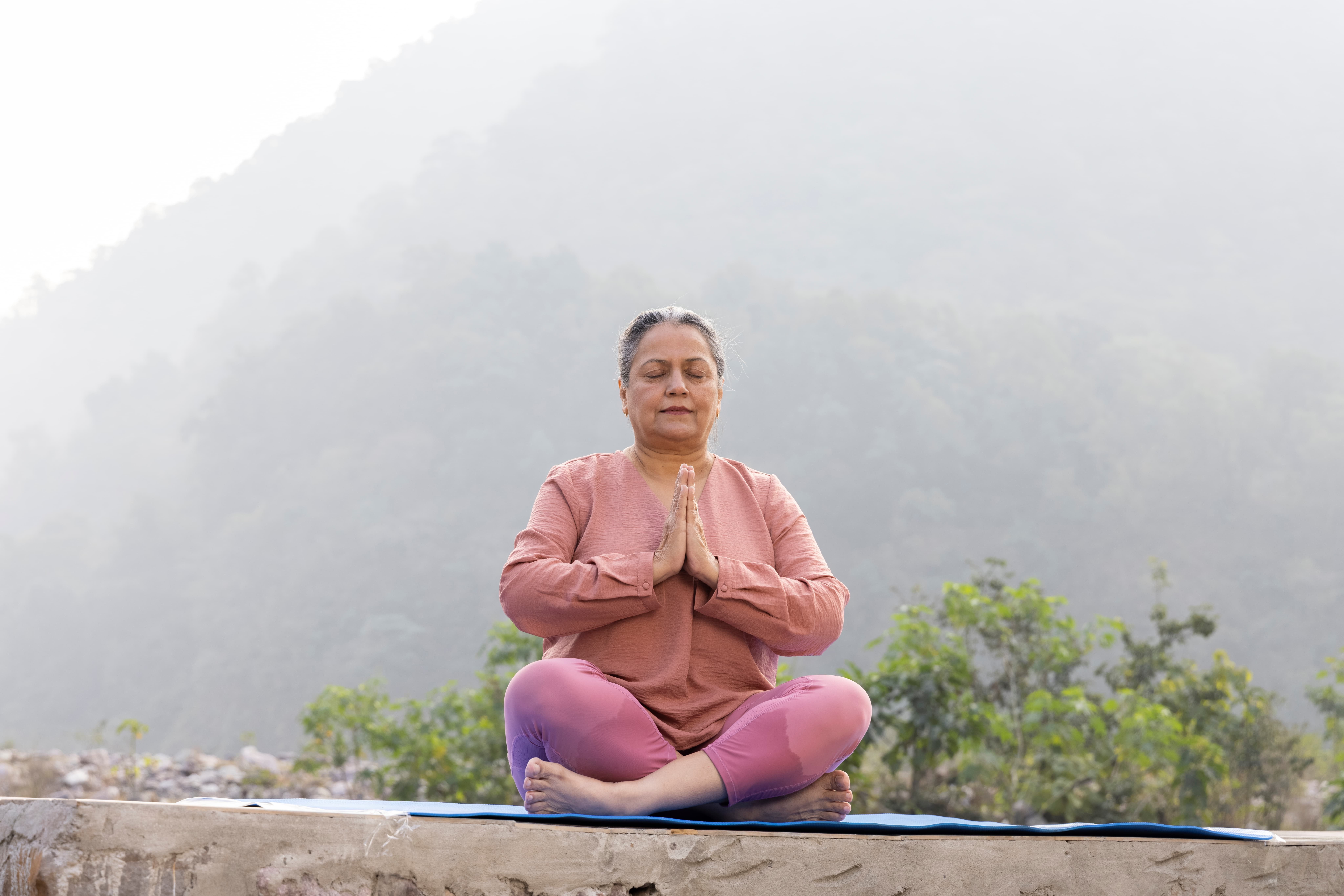
October 20 is World Osteoporosis Day, an opportunity to bring attention to bone health and the importance of preventing fractures as we age. For yoga teachers, it's also a good time to consider how osteoporosis affects the way we teach familiar postures. Yoga can support strength, balance, mobility, and physical function, but certain movements may need to be modified for students with reduced bone density. Understanding those modifications allows us to make informed teaching decisions without unnecessarily limiting someone's ability to participate in yoga.
Osteoporosis is often called a silent disease because people can lose bone density without experiencing noticeable symptoms. Someone may attend yoga classes regularly, feel physically strong, and have excellent flexibility without realizing they have osteoporosis. In fact, flexibility can sometimes complicate the picture. A student who moves easily into deep forward folds or spinal twists may be accustomed to exploring their full range of motion, even when those movements are no longer appropriate for their bone health.
This is why teaching yoga for osteoporosis requires more than offering a gentler version of a traditional sequence. We need to understand how movement places stress on the skeleton, which types of loading may increase fracture risk, and how to preserve the benefits of yoga through thoughtful modifications. The goal isn't to eliminate movement or discourage students from practicing. It's to recognize that different bodies have different needs, and those needs can change over time.
Osteoporosis is a skeletal condition characterized by reduced bone strength and an increased risk of fractures. Bone is living tissue that continually undergoes remodeling, a process in which older bone is broken down and new bone is formed. Throughout childhood and early adulthood, bone formation generally exceeds bone loss, allowing us to build bone mass. Later in life, the balance gradually shifts, and bone loss may begin to exceed formation.
Several factors influence this process, including age, genetics, hormonal changes, nutrition, physical activity, medications, and certain medical conditions. Women experience accelerated bone loss during the menopause transition as estrogen levels decline. However, osteoporosis isn't exclusively a women's health issue. Men can also develop osteoporosis, and younger adults may experience reduced bone density because of medical conditions, medications, or other risk factors.
The most common fractures associated with osteoporosis occur in the spine, hip, and wrist. Vertebral compression fractures are especially relevant to yoga because they can occur when weakened vertebrae are exposed to forces they cannot tolerate. These fractures may cause significant pain, changes in spinal alignment, reduced mobility, and limitations in daily activities. Some vertebral fractures produce relatively few symptoms, meaning an individual may not immediately recognize that an injury has occurred.
For yoga teachers, it's important to understand that osteoporosis doesn't necessarily change how someone looks or moves. A student may appear healthy and physically capable while having a substantially increased fracture risk. We cannot determine bone density by observing posture, flexibility, body size, or physical performance. Diagnosis typically involves bone mineral density testing, often through a dual-energy X-ray absorptiometry scan, commonly called a DXA scan, along with clinical assessment of fracture risk.
Osteopenia refers to bone mineral density that is lower than expected but does not meet the diagnostic threshold for osteoporosis. Although osteopenia generally represents less severe bone loss, it shouldn't automatically be dismissed as insignificant. Fracture risk depends on more than bone density alone. Age, previous fractures, family history, certain medications, fall risk, and other health conditions can influence whether someone is likely to experience a fracture.
This distinction matters when planning yoga modifications. Two students with similar bone density measurements may have very different physical abilities and fracture histories. Someone with osteoporosis who has never experienced a fracture may be able to participate in a wider range of activities than someone who has sustained multiple vertebral compression fractures. Similarly, a student with osteopenia and significant balance difficulties may require more support than someone with osteoporosis who demonstrates good strength and stability.
Rather than applying identical restrictions to everyone with low bone density, teachers should understand the general principles of safer movement while recognizing when individualized guidance is necessary. Students with previous fragility fractures, significant spinal changes, pain, or high fracture risk may benefit from assessment by a physical therapist or another qualified healthcare professional before participating in unfamiliar movements.
Yes. For many people with osteoporosis, yoga can remain an enjoyable and beneficial part of an active lifestyle. The important consideration is how the practice is adapted to the individual's physical condition and fracture risk. Osteoporosis doesn't automatically mean avoiding yoga, but it does mean that certain postures, transitions, and movement patterns deserve closer attention.
Exercise recommendations for osteoporosis consistently emphasize muscle strengthening, balance training, and maintaining physical function. The international Too Fit To Fracture consensus recommendations support exercise programs that combine resistance training with balance training for adults with osteoporosis, including those with previous vertebral fractures. The recommendations also emphasize safe movement strategies and individualized assessment rather than unnecessarily restricting physical activity.
Yoga can contribute to several of these goals. Standing postures require muscular engagement and postural control, while appropriately modified balance exercises can help students develop stability and confidence. Certain postures can also strengthen the muscles that support upright posture and improve awareness of how the body moves during everyday activities.
However, yoga alone should not be assumed to provide all the loading necessary to maintain or improve bone density. Progressive resistance training and appropriate weight-bearing exercise remain important components of osteoporosis management. Yoga can complement these activities, but the evidence doesn't establish that a conventional yoga practice can reliably reverse osteoporosis or prevent fractures on its own.
One of the most important considerations when teaching yoga for osteoporosis is how movement affects the spine. The vertebral bodies contain substantial amounts of trabecular bone, which can become particularly vulnerable as bone strength decreases. Certain movements, especially repeated or forceful spinal flexion, can increase compressive loading on the front of the vertebral bodies.
Spinal flexion occurs when the spine rounds forward, as it does during a traditional rounded forward fold. While spinal flexion is a normal movement for a healthy spine, repeatedly moving into deep or loaded flexion may increase fracture risk for someone with osteoporosis, particularly when there is a history of vertebral fractures.
The Bone Health & Osteoporosis Foundation recommends avoiding exercises that involve significant forward bending of the spine and modifying movements through the use of a hip hinge. Its guidance also cautions against forceful spinal twisting, particularly when combined with forward bending.
This doesn't mean the spine must remain rigid or perfectly straight throughout every movement. Normal spinal curves vary, and some people have structural changes that make a completely neutral alignment impossible. The goal is to reduce unnecessary loading and avoid movements that place excessive stress on vulnerable vertebrae while preserving comfortable, functional mobility.
Teaching yoga for osteoporosis involves preserving the purpose of a posture while adjusting the movement to reduce unnecessary fracture risk. In many cases, relatively small changes in alignment, range of motion, or the use of props can make a familiar posture more appropriate. The key is understanding what the movement is intended to accomplish and whether the traditional version introduces risks that outweigh its benefits.
Forward folds are common throughout yoga, appearing in seated stretches, standing sequences, and transitions between postures. For students with osteoporosis, the concern is not simply bending forward. It's the amount of spinal rounding involved, particularly when the movement places additional load on the vertebrae.
A hip hinge allows the torso to move forward primarily through the hip joints while maintaining a comfortable, elongated spinal position. In a standing forward fold, students can bend their knees, place their hands on blocks or a stable chair, and move their pelvis backward as the torso inclines forward. The intention is to maintain the natural curves of the spine rather than collapsing into a rounded position.
This approach can also be applied to seated postures. Instead of reaching toward the feet by rounding the back, students can sit on a folded blanket or bolster to improve pelvic positioning and hinge forward only as far as they can maintain appropriate spinal alignment. Some students may find that remaining upright provides a more useful experience than attempting a forward fold.
For teachers, this is an opportunity to emphasize movement mechanics rather than the appearance of the posture. The goal isn't to reach the floor or achieve the deepest possible stretch. It's to understand where the movement is occurring and how to adapt it appropriately.
Spinal rotation is another movement that deserves attention when teaching students with osteoporosis. Deep twisting postures, particularly those involving leverage from the arms or rotation combined with spinal flexion, may place unnecessary stress on the vertebrae.
Rather than encouraging students to pull themselves farther into a seated twist, teachers can offer smaller, controlled movements that remain comfortably within the available range of motion. Students might practice gentle rotation while sitting upright, maintaining an elongated spine and avoiding the use of their arms to force additional movement.
The Too Fit To Fracture recommendations distinguish between end-range twisting, which may need to be avoided or modified, and slow, controlled spinal movement within a comfortable range. This is an important distinction because the goal is not necessarily to eliminate all rotation. It's to avoid excessive force and recognize when a particular movement is inappropriate for an individual's fracture risk.
Students with previous vertebral fractures or significant spinal changes may require more specific guidance, and some twisting postures may need to be omitted altogether. As with other modifications, the appropriate approach depends on the person rather than the name of the posture.
Balance training is one of the most valuable components of exercise for people with osteoporosis because falls are a major cause of fractures. Yoga offers several opportunities to develop balance, including Tree Pose, Mountain Pose variations, and controlled standing transitions.
However, balance training should be appropriately challenging without exposing students to unnecessary fall risk. A student who struggles to maintain Tree Pose independently may benefit from practicing near a wall or keeping one hand on a stable support. The standing foot can remain firmly grounded while the opposite toes rest lightly on the floor, allowing the student to explore weight shifting before progressing to a more demanding balance.
Support doesn't eliminate the benefits of balance training. It allows students to develop the necessary skills while reducing the likelihood of falling. Over time, the challenge can be adjusted according to the student's abilities, confidence, and medical guidance.
For students with osteoporosis, this may be more beneficial than encouraging unsupported balancing postures simply because they represent the traditional version of a pose. The objective is to develop stability and functional balance, not to demonstrate how long someone can remain on one foot without assistance.
Yoga classes for osteoporosis should also consider the importance of muscular strength, particularly in the legs, hips, and muscles that support upright posture. Standing postures such as Warrior II and appropriately modified Chair Pose can provide opportunities for muscular engagement, while controlled transitions between sitting and standing can support functional strength.
Postural awareness is especially relevant because vertebral fractures and changes in spinal alignment may contribute to increased thoracic kyphosis, or a more pronounced forward curvature of the upper back. Exercises that strengthen the spinal extensor muscles can help support upright posture and physical function, although they must be selected carefully for individuals with existing fractures.
Rather than emphasizing dramatic backbends or forcing the chest into an exaggerated position, teachers can encourage comfortable spinal length, gentle engagement of the back muscles, and appropriate shoulder movement. Some students may benefit from standing with their back near a wall to develop awareness of their natural alignment, without forcing the head or spine into a position that causes discomfort.
The broader goal is to help students maintain strength and movement confidence while respecting the structural limitations that osteoporosis may introduce. When modifications are based on sound movement principles, yoga can remain both accessible and physically meaningful.
One of the most common questions yoga teachers encounter when working with students who have osteoporosis is which poses are safe and which should be avoided. Unfortunately, there isn't a single list that applies equally to everyone. Osteoporosis affects individuals differently, and fracture risk depends on factors including bone density, previous fractures, age, strength, balance, and other medical conditions. A student with mild osteoporosis and no history of fractures may have different movement considerations than someone who has experienced multiple vertebral compression fractures.
Rather than dividing every yoga posture into safe and unsafe categories, it's more useful to understand the movement patterns that may increase fracture risk. Research and clinical recommendations consistently identify particular concerns involving loaded spinal flexion, forceful spinal rotation, and movements that create a significant risk of falling. These considerations are especially important for students with vertebral osteoporosis, because weakened vertebral bodies may be vulnerable to forces that would not ordinarily cause injury in someone with healthy bone density.
A 2019 case series published in Mayo Clinic Proceedings described 11 individuals who experienced vertebral compression fractures associated with yoga postures. The report included fractures occurring during movements involving spinal flexion and other positions that placed stress on the spine. Although a case series cannot establish how frequently yoga-related fractures occur or determine the overall safety of yoga, it illustrates why teachers should take existing osteoporosis diagnoses seriously when selecting and modifying postures.
Standing Forward Fold, or Uttanasana, is a familiar component of many yoga classes, particularly those incorporating Sun Salutations. In its traditional form, students may allow the spine to round as the torso folds toward the legs. For someone with osteoporosis, particularly when there is a history of vertebral compression fractures, this combination of spinal flexion and gravitational loading can be concerning.
The same principle applies to seated forward bends such as Paschimottanasana. Students often attempt to deepen these postures by reaching toward the feet, drawing the chest toward the thighs, or pulling themselves forward with their arms. These actions may increase spinal rounding and introduce additional forces through the vertebral bodies. The concern isn't the hamstring stretch itself, but the way the stretch is achieved.
A more appropriate approach may involve bending the knees, elevating the pelvis on a folded blanket, and hinging forward from the hips while maintaining comfortable spinal alignment. In standing postures, students can use blocks, a chair, or their thighs for support. Some individuals may need to avoid forward bending altogether until they receive individualized guidance, particularly following a vertebral fracture.
Yoga teachers should also consider how often forward folds appear throughout a class. Even when each individual movement seems relatively gentle, repeated transitions into spinal flexion may introduce unnecessary exposure for someone at elevated fracture risk. Modifying the sequence itself can be just as important as modifying an individual posture.
Spinal rotation is another movement pattern that deserves careful consideration. Postures such as Ardha Matsyendrasana, Revolved Triangle, and Revolved Side Angle can involve substantial rotation through the spine. Depending on how they're performed, students may also use their arms or hands to create leverage, pulling themselves farther into the twist.
For students with osteoporosis, forceful or end-range spinal rotation may increase stress on vulnerable vertebrae, particularly when combined with spinal flexion. Revolved Triangle is a useful example because the posture can involve a forward hip hinge, spinal rotation, and significant balance demands simultaneously. Each of these components may require modification, and their combination may make the traditional posture inappropriate for some students.
Rather than encouraging students to deepen a twist, teachers can offer smaller, controlled movements that emphasize comfortable rotation without force. In a seated position, students might remain upright and gently turn the torso within a limited range. In standing sequences, a non-revolved variation may be a more appropriate choice.
The goal isn't necessarily to eliminate all spinal rotation. Normal daily activities require some degree of turning and reaching, and maintaining comfortable functional mobility remains important. However, teachers should distinguish between controlled movement and postures that deliberately take the spine into its deepest available range. Students with previous vertebral fractures or substantial spinal changes may require more restrictive modifications based on professional assessment.
Traditional abdominal exercises such as crunches, sit-ups, and certain Pilates-style roll-ups may be inappropriate for individuals with osteoporosis because they repeatedly place the spine into flexion. These exercises are not necessarily part of every yoga class, but similar movement patterns appear in some core-strengthening sequences and transitions between postures.
For example, students may be instructed to roll down from a seated position one vertebra at a time or curl the torso toward the knees during abdominal exercises. Although these movements can strengthen abdominal muscles in some populations, repeated loaded spinal flexion is generally discouraged for people at elevated risk of vertebral fractures.
Core strengthening remains important, particularly because the muscles surrounding the trunk contribute to stability, posture, and everyday movement. The objective is to select exercises that strengthen these muscles without requiring repeated spinal rounding.
Depending on the student's abilities and fracture history, appropriate alternatives may include modified Bird Dog, standing core stabilization exercises, or carefully selected isometric abdominal engagement. These approaches can challenge trunk stability while maintaining a relatively neutral spinal position. However, even exercises commonly described as safe should be adapted when a student has pain, previous fractures, or difficulty maintaining control.
For yoga teachers, this is another reminder that the intended benefit of an exercise doesn't automatically justify every method of achieving it. We can strengthen the core without relying on repeated spinal flexion.
Forward bending receives considerable attention in osteoporosis education, but backbending also requires thoughtful consideration. Spinal extension is not inherently harmful, and exercises that strengthen the back extensor muscles are frequently recommended as part of osteoporosis management. However, this doesn't mean that every backbend is appropriate for someone with reduced bone strength.
Deep backbends such as Wheel Pose, or Urdhva Dhanurasana, place substantial demands on spinal mobility, shoulder flexibility, muscular strength, and coordination. For some students with osteoporosis, especially those with previous fractures or significant spinal changes, attempting an extreme backbend may create unnecessary risk. The same concern can apply to forceful transitions into Camel Pose or other postures that emphasize achieving a large range of spinal extension.
A more appropriate approach may involve smaller, controlled movements that emphasize muscular support rather than maximum flexibility. Gentle standing chest-opening exercises, appropriately modified Cobra Pose, or carefully selected spinal extensor strengthening exercises may offer useful alternatives, depending on the student's individual condition.
Teachers should also avoid assuming that every student needs to correct a rounded upper back by forcing the spine into extension. Structural changes associated with vertebral fractures may limit available movement, and attempting to impose an idealized posture can cause discomfort or additional strain.
The objective is to develop strength, support functional posture, and maintain comfortable movement rather than pursuing the deepest possible backbend.
Balance training is an important component of osteoporosis management, but that doesn't mean every balancing posture is appropriate. Yoga poses that involve significant fall risk deserve particular attention because fractures frequently occur following falls.
Headstand, Handstand, and unsupported arm balances may present unnecessary risks for students with osteoporosis, especially when the student lacks sufficient strength, coordination, or experience. A fall from an inverted position can create substantial forces through the wrists, shoulders, spine, or hips. Headstand also introduces direct loading through the head and cervical spine, making it a particularly concerning choice for individuals with compromised bone strength.
Even familiar standing balance poses can require modification. Tree Pose, Half Moon, and Standing Hand-to-Big-Toe Pose may be appropriate for some students when practiced with reliable support, but they shouldn't be taught in a way that prioritizes unsupported balance over safety.
Teachers can incorporate balance training through supported standing postures, controlled weight shifting, and exercises that challenge stability without creating unnecessary fall risk. A wall, chair, or other stable support can allow students to develop balance while maintaining greater control over their movements.
The important distinction is between training balance and testing the limits of someone's ability to avoid falling. For students with osteoporosis, the potential consequences of a fall make that distinction especially significant.
Individual postures are only part of the picture. Yoga teachers also need to consider how students move between them. Transitions often occur quickly, and students may pay less attention to spinal positioning when they're focused on keeping up with the sequence.
Moving repeatedly from Standing Forward Fold into Half Lift, for example, can involve substantial spinal movement if students round through the back rather than hinging from the hips. Similarly, transitions from seated to reclining positions may encourage students to roll through the spine in ways that are inappropriate for their fracture risk.
Sun Salutations can be adapted by replacing deep forward folds with supported hip hinges, using a chair or blocks, and slowing transitions to allow students to maintain control. Students may also benefit from stepping rather than jumping between postures, particularly when balance or coordination is a concern.
Getting down to the floor and returning to standing deserves attention as well. These movements require strength, balance, and coordination, and they may become more challenging with age or following fractures. Teaching students how to use stable support and move through these transitions safely can provide practical benefits that extend beyond yoga.
Ultimately, modifying yoga for osteoporosis isn't about removing every challenging posture. It's about understanding the demands of each movement and making informed decisions about which elements are appropriate for the person practicing. With thoughtful sequencing, appropriate support, and attention to individual fracture risk, yoga can remain an enjoyable and meaningful part of maintaining physical function and overall well-being.
Teaching yoga to students with osteoporosis requires an understanding of how reduced bone strength affects movement, balance, and fracture risk. While yoga teachers aren't responsible for diagnosing osteoporosis or developing medical treatment plans, we do have a responsibility to understand common health conditions that may influence the safety of our classes. Osteoporosis is particularly important because students may have the condition without experiencing symptoms, and their physical appearance or flexibility may offer no indication of their bone health.
One of the challenges in teaching group yoga classes is that students often arrive with different medical histories, physical abilities, and levels of experience. A posture that is appropriate for one student may be unsuitable for another, even when both appear equally capable. This is why teaching yoga for osteoporosis involves more than memorizing a list of contraindicated poses. It requires understanding the underlying movement principles, recognizing when modifications are necessary, and knowing when a student would benefit from individualized guidance.
Yoga teachers should also remember that osteoporosis is not synonymous with frailty or physical incapacity. Many people with osteoporosis remain active, strong, and physically independent. Unnecessarily restricting movement can contribute to fear, reduced confidence, and physical deconditioning. The goal is to encourage appropriate activity while avoiding movements that introduce unnecessary fracture risk.
A comprehensive student intake process can help teachers identify conditions that may influence yoga participation. Depending on the teaching environment, this may include asking about osteoporosis, osteopenia, previous fractures, recent surgeries, balance difficulties, and other relevant health concerns. These questions should be handled respectfully, with appropriate attention to privacy and the understanding that students may not know their bone density or may choose not to disclose medical information.
A history of vertebral compression fractures is particularly important because it can significantly influence movement recommendations. Students who have experienced fragility fractures may require more conservative modifications and individualized guidance from a healthcare professional familiar with osteoporosis management. Teachers should also recognize that a previous fracture may not always be obvious. Some vertebral fractures occur with relatively little pain, while others result in persistent discomfort or changes in posture.
When a student reports osteoporosis, it's reasonable to ask whether they've received exercise recommendations or movement restrictions from their healthcare provider. Rather than attempting to interpret bone density results independently, teachers can encourage students to discuss appropriate activity with their physician or physical therapist. This is especially important when students are returning to exercise after a fracture or experiencing unexplained spinal pain.
How we introduce modifications can influence whether students feel comfortable using them. When alternatives are consistently described as easier versions or reserved for people who cannot perform the traditional posture, students may hesitate to choose an option that would better support their bodies. This is particularly relevant for experienced yoga practitioners who may have practiced certain postures for years before receiving an osteoporosis diagnosis.
A more useful approach is to present modifications as legitimate variations with different physical demands. For example, using blocks during a standing forward fold changes the amount of support available and may help a student maintain a more appropriate spinal position. Practicing Tree Pose near a wall reduces fall risk while preserving opportunities to develop balance. These choices aren't necessarily easier; they're better suited to particular circumstances.
Teachers can also explain the reasoning behind modifications without publicly identifying a student's medical condition. When introducing a supported hip hinge, for example, we might discuss how the movement allows the hips to contribute more directly while reducing unnecessary spinal rounding. This information benefits the entire class and allows students to make informed choices without drawing attention to anyone's diagnosis.
For students with osteoporosis, maintaining confidence in movement is important. We want students to understand which activities may require caution without becoming fearful of ordinary physical movement. Thoughtful teaching can help preserve both safety and a positive relationship with exercise.
Although much of the discussion surrounding osteoporosis and yoga focuses on movements to avoid, it's equally important to consider what students can gain from an appropriately modified practice. Exercise recommendations for osteoporosis consistently emphasize muscular strength, balance, and maintaining the physical abilities needed for everyday activities. These are areas where yoga can make a meaningful contribution.
Standing postures such as Warrior II, supported Chair Pose, and Mountain Pose variations can provide opportunities to engage the muscles of the legs and hips. Controlled transitions between postures can challenge coordination and functional strength, while supported balance exercises allow students to practice maintaining stability as their weight shifts. These movements can be adapted to different ability levels without requiring students to perform advanced postures.
Research also supports the importance of progressive resistance training for people with osteoporosis. Yoga may complement resistance training, but it shouldn't automatically be considered an equivalent substitute. The amount of muscular effort required during a yoga posture varies considerably, and many traditional yoga classes do not provide the progressive loading necessary to meaningfully improve bone strength.
For teachers, this distinction reinforces the importance of understanding what a practice can realistically accomplish. Yoga may help students maintain mobility, improve balance, strengthen certain muscle groups, and develop greater confidence in movement. These are valuable outcomes even when the practice isn't specifically designed to increase bone mineral density.
Balance training is especially important because preventing falls is a major component of reducing fracture risk. Hip fractures, in particular, can have substantial consequences for mobility, independence, and overall health. Improving balance and lower-body strength may help reduce the likelihood of falls, although no individual yoga posture can guarantee that a fall or fracture will be prevented.
Yoga teachers can incorporate balance training without relying on challenging unsupported postures. Controlled weight shifting, supported single-leg standing, and slow transitions between standing positions can all provide opportunities to develop stability. Students can use a wall or sturdy chair while gradually adjusting the level of support according to their abilities.
The goal is to create an appropriate challenge without introducing unnecessary risk. A student who repeatedly loses balance during an unsupported posture may benefit more from a supported variation that allows them to practice with control. As their balance improves, the difficulty can be adjusted gradually.
This approach is consistent with the broader principle of individualized exercise programming. Effective balance training should be sufficiently challenging to encourage improvement while remaining appropriate for the individual's abilities and risk factors.
Yoga teachers play an important role in helping students participate in physical activity, but osteoporosis management requires medical expertise that extends beyond the scope of yoga instruction. Diagnosing osteoporosis, interpreting DXA scans, estimating fracture risk, and prescribing treatment are responsibilities of qualified healthcare professionals.
Teachers should avoid making promises that yoga will reverse osteoporosis, rebuild lost bone, or prevent fractures. Although some studies have explored the relationship between yoga and bone mineral density, the available evidence is not strong enough to establish yoga as an effective stand-alone treatment for osteoporosis. Exercise recommendations should be understood within the broader context of medical management, nutrition, fall prevention, and appropriate physical activity.
Collaboration with healthcare professionals can be particularly valuable when working with students who have experienced fractures or have complex medical histories. Physical therapists with experience in osteoporosis management can provide individualized movement recommendations and help students develop appropriate strength and balance programs. Yoga teachers can then incorporate relevant modifications into their classes while respecting those recommendations.
Professional responsibility also includes continuing education. As research develops and clinical recommendations evolve, teachers should remain willing to update their understanding of safe movement practices. Teaching methods that were widely accepted years ago may require reconsideration when working with specific populations.
Understanding osteoporosis is one example of why continuing education matters in yoga teaching. Yoga teachers regularly work with students experiencing a wide range of physical conditions, including arthritis, joint replacements, chronic pain, pregnancy-related changes, and age-related differences in strength and mobility. Each of these circumstances may influence how familiar yoga postures should be taught.
Evidence-informed teaching involves combining an understanding of available research with sound movement principles, professional experience, and the individual needs of students. It doesn't require teachers to abandon traditional yoga or turn every class into a clinical exercise program. Instead, it encourages us to recognize when traditional approaches may need to be adapted.
At Lifted Lotus, we believe yoga education should provide teachers with more than an understanding of how to demonstrate postures. Learning anatomy, movement mechanics, contraindications, and appropriate modifications helps teachers make thoughtful decisions in real teaching environments. These skills become increasingly important as yoga continues to reach students across different ages, abilities, and health conditions.
The more we understand about the people participating in our classes, the better equipped we are to offer yoga that is both meaningful and appropriate for their needs.
World Osteoporosis Day is an opportunity to recognize that bone health deserves a place in conversations about yoga safety and accessibility. Osteoporosis affects millions of people, many of whom remain physically active and may attend yoga classes without realizing that certain movements require modification. As teachers, understanding the relationship between reduced bone strength, spinal loading, and fracture risk allows us to make more informed decisions about the practices we share.
Teaching yoga for osteoporosis doesn't mean eliminating every challenging posture or discouraging students from moving. It means understanding which movements may create unnecessary risks and identifying alternatives that preserve the benefits of physical activity. Hip hinging instead of deep spinal rounding, avoiding forceful end-range twists, incorporating supported balance work, and emphasizing muscular strength are all examples of how thoughtful modifications can support safer participation.
Perhaps most importantly, we should remember that students with osteoporosis are not defined by their diagnosis. Their strength, mobility, confidence, and physical abilities may vary considerably. A student who has practiced yoga for decades may need to reconsider familiar postures, while someone new to yoga may benefit from learning appropriate movement strategies from the beginning. Both deserve instruction that respects their individual experiences and supports continued participation.
Yoga teachers don't need to become osteoporosis specialists, but we should understand enough about the condition to recognize potential concerns, communicate responsibly, and refer students for individualized guidance when appropriate. Continuing education and a willingness to reconsider familiar teaching habits are essential parts of that responsibility.
The goal isn't to make every yoga posture possible for every student. It's to understand which movements are appropriate, how to modify them when necessary, and how to help students continue practicing yoga with confidence.
That's what thoughtful, informed yoga teaching looks like, not only on World Osteoporosis Day, but throughout the year.